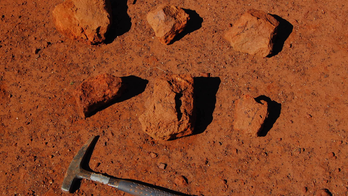
Evolution July 11, 2018 Scientists reveal they have found the world's oldest color According to a recent study, bright pink is the world's oldest color, having been discovered in rocks that are 1.1 billion years old.
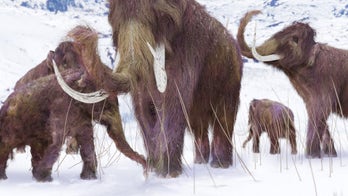
Fossils May 17, 2018 Could reviving Woolly-Mammoth genes fight the effects of global warming? JERSEY CITY, N.J. — Woolly mammoths have been extinct for more than 4,000 years, but with new gene-editing techniques, they could help mitigate the effects of a modern problem: climate change.
Mammals May 14, 2018 Two-headed fawn found in Minnesota forest shows rare wildlife deformity A mushroom hunter's discovery of a conjoined white-tailed fawn in a Minnesota forest two years ago is being hailed by researchers as a landmark case among oddities in nature.
Africa March 22, 2018 Winged wonders: the exotic birds of Africa Bird lovers from all corners of the globe flock to Africa for the vast numbers of unique and remarkable species found throughout the continent.
Beach March 21, 2018 4 up-close encounters with sea creatures Sharks and whales and manatees—oh my! For a kid fascinated by marine life, there’s nothing more exciting than interacting with a finned friend in its natural habitat. Got a water baby in your family? Here are four encounters that let you get up-close and personal with some not-so-scary sea creatures.
Evolution March 21, 2018 Amazing places to swim with sharks Nothing sends ocean swimmers fleeing for shore faster than a fin sighting. The word shark alone is enough to scare most people, immediately calling to mind the menacing theme song for the movie "Jaws"—and, of course, all the gruesome attack scenes therein. But some people look past the sensationalism and all those razor-sharp teeth (up to 15 rows of them) to see sharks for what they really are—streamlined, beautiful animals that are fantastically adapted to their environment. (There’s a reason they’ve been around for 64 million years.) For those brave souls, the thrill of floating alongside these big fish far outweighs the fright. And in truth, many sharks pose a bigger threat to plankton than to surfers or other fish—though swimming alongside them still lends plenty of bragging rights. In order to do it, you’ll need a boat (in most cases, anyway) and local knowledge to find the fish. The surest bet is to hire a local guide service or naturalist who can take you out, outfit you with snorkels or dive gear, and—perhaps most important—let you know how close is too close. We scoured the globe to come up with some great guide services that offer you a glimpse inside the watery world of the oceans’ most-feared fish. They’ll take you on daylong dive and snorkeling charters, set you up on a live-aboard yacht for extended, all-inclusive trips, and even load you into a deep-sea submersible to get a Cousteau-style look at some seriously creepy (and rare) creatures. That underscores another fascinating fact about sharks—more than the much-maligned Great White, there are 470 species of sharks prowling the world's oceans. There are bus-sized, plankton-eating whale sharks that you can snorkel up to and touch; little lemon sharks that you can lift out of the water (literally, but we don't recommend it…their "nibbles" can cause serious injury); streamlined makos that blast through the water at upwards of 25 mph; bottom-dwelling nurse sharks who are sort of like catfish of the sea; and, yes, 5,000-pound apex predators called Great Whites. It’s up to you what shark you want to see, and how close you want to get. Some you can reach out and touch, others are best kept on the other side of a thick steel cage. With that in mind, here are the best places in the world to get nose-to-snout with sharks.
Evolution March 20, 2018 The 8 biggest mysteries of our planet Many riddles still remain when it comes to our planet.
Evolution March 12, 2018 An electro-blob under Africa may be 'ground zero' for Earth's magnetic field reversal A flip in Earth's magnetic field may be brewing.
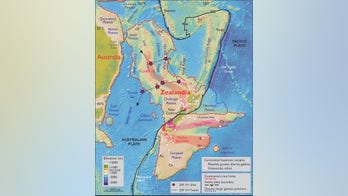
Evolution September 26, 2017 Scientists journey to the world's 'Lost' 8th continent Scientists will soon venture to the world's hidden eighth continent, the sunken land of Zealandia.
Evolution September 25, 2017 This enzyme enabled life to conquer a hostile Earth Computers are simulating the ancestral versions of the most common protein on Earth, giving scientists an unparalleled look at early life's development of harnessing energy from the sun and production of oxygen.
Biology January 4, 2017 Humans in 100,000 years: What will we look like? Homo sapiens have slowly evolved over thousands of millennia, but what happens when modern technology comes into play?